
What sound does Scotland make?
Years of Patents | Bagpipe (1941)
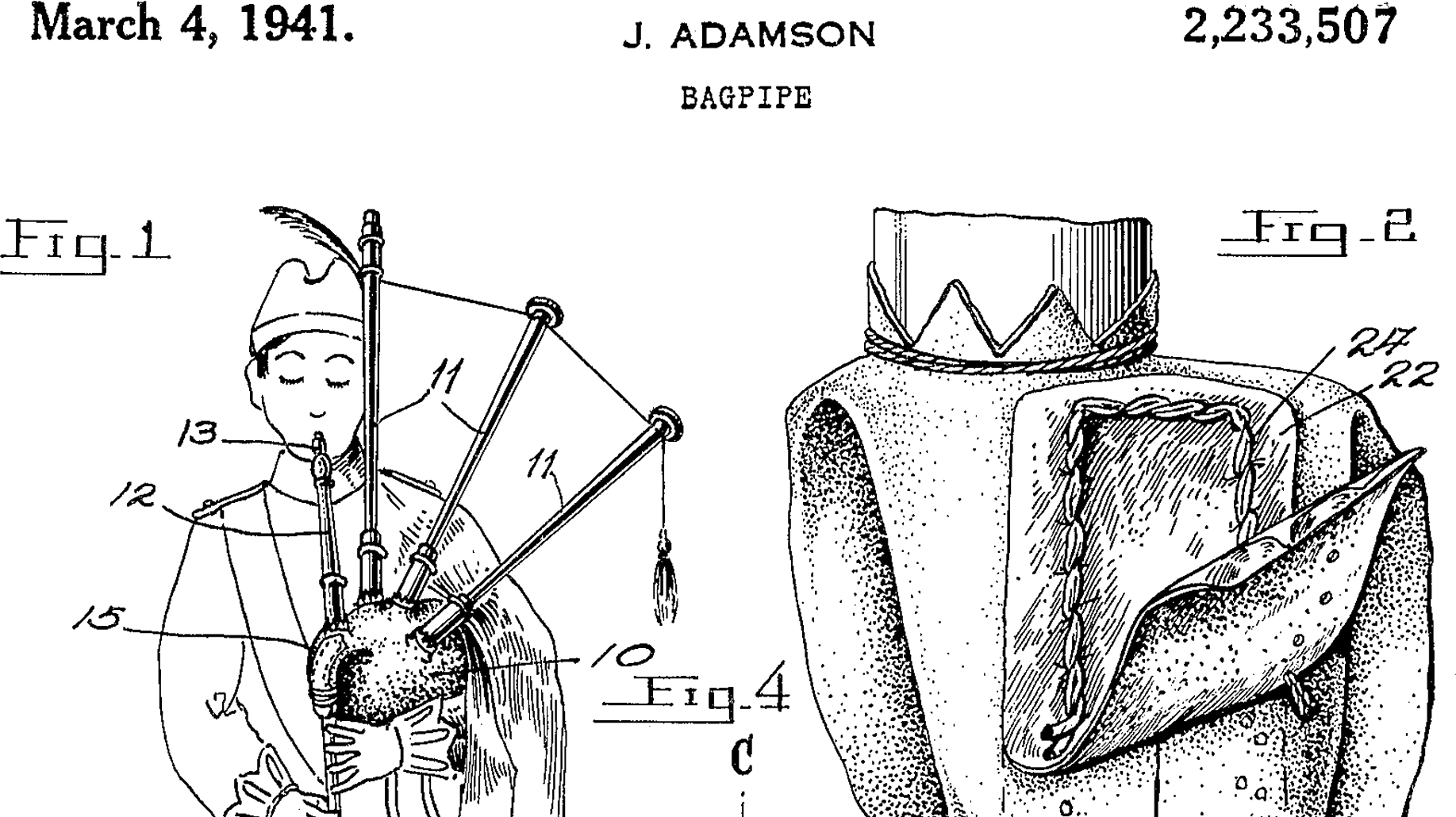
On May 23, 1940, John Adamson of Boston, Massachusetts was awarded a patent for an improved bagpipe. He claimed a novel method of construction for bagpipes that improved the airflow through the instrument by enhancing the construction of the neck, which connects the bag and chanter (the part that bagpipers hold in their hands).
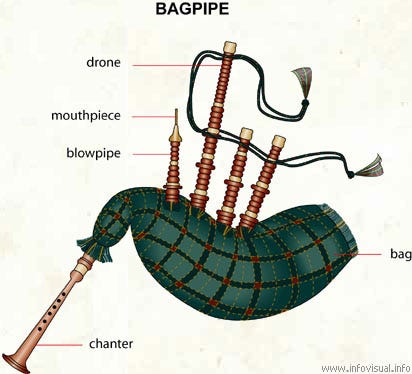
Adamson, a native of Scotland, immigrated to Boston in the early 20th century with his family. After having performed various jobs such as coal miner, editor and grocer he became well-known for his expertise in bagpipes.
Having learned the trade from his father, Adamson established the only bagpipe repair and production facility in America. Being one of only six bagpipe makers in the world, Adamson helped to popularize the bagpipe in the new world.
Adamson’s bagpipes took approximately two weeks to make, and involved animal skin, such as elk hide, for the construction of the bag. He sold his bagpipes for between $100 and $350, which was a considerable sum given the average wage was only $0.35/hr.

Evidence of bagpipes in Europe can be found starting in the 9th century AD. That said, there are indications that instruments similar to the bagpipe were developed as early as 100 BC.
Although many associate the bagpipe with various military traditions, its military use only began 200 to 300 years ago. Before being incorporated into different military rituals, the bagpipe was mainly a folk or pastoral instrument.
The bagpipe that is most familiar to English-speakers is the Scottish Lowland bagpipe, of which Adamson specialized in. Other Western European countries, such as Germany, the Netherlands, Ireland, and France, developed their own variations on the bagpipe.
Adamson’s production and repair of bagpipes helped to firmly establish their position in North American culture. Whether you love or hate the sound of a bagpipe, it is probable that Adamson’s work also encouraged other Scottish traditions to flourish in the new world.
Sources: